About Me

My photo
Science communication is important in today's technologically advanced society. A good part of the adult community is not science savvy and lacks the background to make sense of rapidly changing technology. My blog attempts to help by publishing articles of general interest in an easy to read and understand format without using mathematics. You can contact me at ektalks@yahoo.co.uk

Monday, 22 August 2016

Future of Food; How to feed 10 billion People? There is Enough Food; Strong, Sensible Policies Required


'Obesity is the problem of only humans and their pets'
'Agriculture is the process by which oil is converted into edible food'
'The security of people and nations rests on four pillars - food, energy, water and climate.  They are all closely related, and all under increasing stress'  Tom Burke, The ENDS Report (2008)
(click on a slide to view its full page image)

This blog is about the way the food in future might be different from what we eat today.  The global population could touch 10 billion by 2070 - more mouths to feed.  Better understanding of nutrition and health will modify our diets. Climate change and new technologies will change how and what food we produce.  
It may not appear so, but there is sufficient food today to feed the global population of 7.4 billion and it is possible to produce enough food to feed nutritiously 10 billion population in the future.  Let us look at some data:  

Of the 7.4 billion people, more than 10% are chronically malnourished10% are obese and 22% are overweight.  
One third of food produced for human consumption is wasted/lost with a monetary value of US$1000 billion.  
This wasted food is enough to feed the world's hungry people.  There is sufficient food to go around - it just is not happening. If we can reduce over-consumption and wastage then the world will enjoy a good surplus of food, better health and cleaner, more stable environment. 
Food shortage is due to bad management, poor distribution and a lack of will to help.
I shall first look at the current situation regarding how we produce food, what we eat, and how we can improve food availability globally without adversely affecting the resources of our planet (sustainable development).  
Over-consumption, particularly in the developed countries, has unleashed the scourge of obesity with serious consequences to human health and well-being. 

To illustrate the point, I shall consider the example of protein intake in our diets. Protein is an essential nutrient for building, maintaining and repairing human body tissue. Nine of the 20 amino acids that are used to make protein cannot be produced by the human body and must be obtained from food. However, several myths overstate the importance of protein in diets, especially from animal-based sources. 
Just now we consume too much protein and more of this is derived from animal sources.  The following two slides demonstrate how production of animal based protein requires vastly more land and water resources and is responsible for many times more GHG emissions that are linked to climate change.

Protein consumption has been increasing - over the past 50 years,  animal protein availability has increased by 59% while the plant protein increase has been 14%.  If we have to eat animal protein, then the consumption of beef must be discouraged (see the following slide) with greater emphasis on fish and poultry.  Note that almost 99% of input calories are lost in producing beef!!!  This is morally repulsive when millions die of hunger every year.
According to an FAO projection, the world would need roughly 70% more crop calories by 2050.  There will be greater demand, particularly for more resource-intensive foods such as meat and dairy. Demand for animal-based foods is projected to rise by 80%, with beef - the most resource and GHG intensive food - projected to grow by 95 percent by 2050.  Most of the increased demand will come from developing countries (see Slide below)

In China, consumption of animal based protein has gone up 10 folds since 1961.  The global poultry consumption is projected to increase by 130% between 2006 and 2050. These are worrying numbers - meat production, particularly beef, requires plant food to be used as input and the efficiency of energy conversion becomes very small - an inefficient way to feed ourselves.  Additionally, changes in land use are enormously harmful to the environment.


From the above discussion, which by necessity was kept short and concise, it is clear to me that the current way of producing and using food is not a viable option for ensuring food security in the future.  One has to consider a holistic approach where preservation of the quality of the environment must be one of the most important goals.  Reduction of GHG from agriculture at the current level of 24%, and that does not include agriculture related transport emissions, is unsustainable and must be brought down.  Cutting down consumption of beef and other red meats will be a good first step.
The governments of the world must take lead in educating people - so far they have woefully failed in this task.  DEFRA (UK) in 2014 carried out a comprehensive survey of consumer attitudes in buying food.  Price (41%) and quality (16%) were the most important reasons given. Environmental and ethical concerns were listed as most important by only 1% of consumers!

Many new developments in food technology have been happening.  Globalization also has created increased awareness of the issues involved.  Some countries are waking up to the fact that GHG emissions must be controlled to limit the possible damaging effects of climate change but overall the global response has been disappointing.  The analysis of the effect of increased global warming (of less than 2C) on future food availability suggests that overall the effect could be small but with serious redistribution of areas where food could be efficiently grown.  The worst hit area are predicted to be the tropical regions which already suffer from poor food security.

An obvious first step will be to make a serious shift from eating animal based proteins to plant based proteins.  The difficulty here is that people like to eat meat - but governments and supermarkets have many methods to achieve an objective.  I list some in the following (House of Lords. 2011. Behaviour Change. Science and Technology Select Committee, 2nd Report of Session 2010–12. London: Authority of the House of Lords.)
There are some good options here. Personally, I am in favour of fiscal disincentives - we can have high taxes on petrol, cigarettes, alcohol for various reasons.  Why should red meats and beef in particular not be made 4 or 5 times more expensive than it is now?  The money raised can then be used to bring the price down of staple food items.  If this is done on a global basis by most countries then the effects will be immediate with a big reduction in GHG emissions as well. The problem I see is that the governments of all nations respond to the rich and well-off and have been often reluctant to impose measures unpopular to this class.

Another damaging development has been the use of crops to make bio-fuels.  In 2013, 40% of US corn production went to produce ethanol, 45% was used to feed livestock and only 15% (down from 90% in year 2000) was used for food and beverages. The following cartoon says it very well:
I had discussed the current situation of food, water, climate and energy resources, with ideas of how to manage them better, in my outreach talks on sustainability and refer you to these for further details.  In the following, we shall see how food production might change over the next 50 years and what can be done to provide sufficient nutritious diet to 10 billion people.  

Future Foods:  Food habits only change slowly - there is a huge cultural tradition attached to how and what we eat. Childhood tastes persist, lot of foods are addictive and this is even more so with the wide use of flavour enhancing chemicals and preservatives by the modern food industry.  It will be wrong to assume that people will change their habits overnight - governments have a role to play in persuading people to move away from animal proteins (especially beef) to plant based proteins and some very useful advice was presented in a slide as to how this may be possible.  Fiscal incentives that hurt the pocket are generally effective and should be tried more widely.

One also has to look around to see what foods are already available whose potential is not being exploited sufficiently and if these may be developed in an environmentally friendly fashion to feed many more people.  Algae and insects are two foods that are already used in some parts of the world and there is no reason that they cannot contribute in solving the food problem.  

Intelligent, Active Food Packaging:  A lot of food is unwittingly thrown away because it has passed its display_by/use_by/best_before date.  The confusing system of labeling should be improved with better guidance to the consumer.  RFID (radio frequency ID) tags will be able to provide much more detailed information about the quality and condition of the product, resulting in much less wastage.

RFID tags are essentially smart - much smarter -  bar codes. RFID tags contain a microchip connected to a tiny antenna and may be read remotely by responding to radio signal from a reader.  In future, besides tracking, identification and price, RFID tags could store information about temperature, humidity, nutritional value, cooking instructions, microbial contamination etc. of the food.  
Nanotechnology (NT) will resolve the problem of how to signal that a product has gone off and how to prevent this in the first place.  Oxidation is one of the main factors affecting shelf life and microbial spoilage of food.  Coatings that are a few nano-meter thick can provide impermeable layers to keep oxygen out and prolong the shelf life of the product. Nano materials will also be useful in reducing other harmful effects due to moisture,UV rays and light.   
Nanoparticle sensors can change colour in response to chaning acidity levels and can be designed to release preservatives when the product starts to go off.
In future, NT can provide edible packaging, bio-degradable packaging, 100% compostable packaging leading to many beneficial changes in the way food is produced, transported, stored and consumed. 

Even if the current food wastage (of the order of 30%) can be halved, then the extra food will, in principle, be enough to eradicate hunger and malnutrition in the world.  And this is even before we include the effects of reducing over-consumption and partly switching to plant proteins from consuming animal proteins. Many other developments are happening that will revolutionize the availability of food in the future. I describe some of these developments in the following: 

Vertical and Hydroponic Farming:  Technology can help agriculture in enhancing crop yields - green revolution in the middle 20th century was responsible for several fold increase in productivity.  Genetic engineering (GM) used correctly and carefully can address many of the problem area in agriculture.  Use of vertical and hydroponic farming will help to reduce land requirements that has been blamed for environmental damage and loss of biodiversity. 

You can watch a video about how to grow hydroponic spinach by clicking here

3D Printing of Food:  Looking further ahead, really exciting developments with more exotic technologies like 3-D printing of food will be able to provide individually tailored food at reasonable cost. 


.I refer you to FAQs on 3D Food Printing for more details.

I now return to the discussion of the two most promising foods neglected by the western societies - Algae and Insects have the potential of significantly reducing the consumption of animal based proteins.
Seaweed (macro-algae) has been used as nourishing protein-rich food for centuries in China, Korea, Japan and Phillipines.  Insects have formed part of the diet in many African countries.    

ALGAE:  Algae may be the ideal non-animal food source for sustainable feeding the world while minimizing environmental damage.  It might be fair to say that all life form on earth depends on algae.  In unicellular form - microalgae - marine algae is eaten by zooplankton which form the base of the aquatic food chain.  Algae are photosynthetic and convert - a lot more efficiently than plants - sunlight, water and carbon di-oxide into carbohydrates, proteins and lipids (fats) while releasing majority of the atmospheric oxygen (marine plants release 70 to 80% of the oxygen present in the atmosphere). Algae are extremely rich in proteins, minerals, vitamins, anti-oxidents.  The essential omega-3 lipids are made by algae which are then taken up by fish through the food chain.  Algae may the best way to provide omega-3 fatty acids to vegetarians and vegans.


Algae is being looked at to produce ethanol (bio-diesels) to replace food crop based biofules.  This will free valuable farmland to grow food for human consumption.  Algae-fuel will use non-arable land and non-potable (unfit for drinking) water and deliver 10 to 100 times more energy per acre than cropland biofuels.

Currently, microalgae is extensively used as fishfeed.

Macro-algae:  Algae comes in many shapes and sizes. Macro-algae can grow to very big sizes - giant kelp can grow to be up to 50 meters long with growth rates approaching 60 cm per day!
Edible Seaweeds are algae that are cultivated for human consumption.  They contain high amounts of fiber and are a complete protein - source of all nine of the essential amino acids necessary for the dietary needs of humans.  Most edible seaweeds are marine algae while most fresh water algae are toxic to humans - traditionally seaweeds were consumed in countries with large coastlines.

The most important food species used in Japan, China and Korea are Nori, Kombu and Wakame.  

The food value of Nori lies in its high protein content (25-30% of dry weight), vitamins and mineral salts, especially iodine.  Its vitamin C content is about 1.5 times that of oranges and 75% of the protein and carbohydrates are digestible by humans.
INSECTS: Insects are eaten by over 2 billion people today.  In the western culture, insects are considered pests and repulsive creatures.  Paradoxically, we treat lobsters as delicacies but grass hoppers or mealworms as terrible animals. Why?
Insects have all the attributes that one would look for in nutritious, environment friendly wholesome food. Did you know that 10 kg of feed will produce 1 kg of beef, 3 kg of pork, 5 kg of chicken but 9 kg of locusts?  The unconverted feed is the waste in the form of manure.  For each calorie produced, Insect farming generates lot less harmful pollutant gases and much less green house gases than are produced by livestock industry.  In terms of fat, proteins and calories, insects are comparable or generally better than meat products.
I shall keep this discussion brief because there are some excellent sources of information that I refer to in the following:

1. General with historic perspective (6 minutes video)

2. TED Talk (16 minutes) on Why Not Eat Insects - a delightful introduction and rational about eating insects by Marcel Dicke

3.  FAO have been a big supporter of shifting diets from traditional meat to plants and insects.  The 200 pages book is available to download online and is a thoroughly researched document - a must read. 

FINAL WORD:   This blog feature has highlighted some of the actions that one can take to alleviate the food poverty a billion people face today and I have argued that even with a population increase of 40 to 50% in the next 50 years, there will be sufficient food to nutritiously feed all.  To get a better grip of the current situation, this blog should really be read with my talks on sustainable development.  
While an optimistic view is taken in this blog, something tells me that the situation will probably not improve much - I hold a cynical belief that human race is largely motivated by greed and wish to control.  New technology, while solving many of today's problems, also is concentrating control in fewer hands and how these characters behave is something I am not even willing to make a guess about.  I suppose, the general level of well being will improve - when people will have enough to eat and wear - but what everybody does will be controlled more and more by some central authority.

Love to hear from you what you think about life in future.

Who am I? Blog Contents

Tuesday, 28 June 2016

The Avian Egg - Marvel of Nature's Architecture - How Eggs Scale with Bird Size - Adaptation to Different Environments

Blog Contents - Who am I?

Introduction:  The structure and function of complex organisms are subject to the laws of physics and chemistry.  Organisms vary in size (and shape) over an extremely large range. How size affects their structure and function is a fascinating subject - the study is called allometric scaling.  In this blog, I shall look at scaling of avian eggs - probably one of the simplest systems for such a study. 


Eggs of different birds are roughly similar in shape and are some of the simplest structures available.  Scaling behaviour of eggs points to a common reproductive strategy in birds. One can attempt to explain deviations from simple scaling behaviour as adaptations to prevailing environmental factors.

What is an egg? -   An egg (ovum) is essentially a reproductive cell produced by the female. The ovum is fertilized by the male spermOnce fertilized, the egg has a full complement of chromosomes and genes for development. The fertilized cell (zygote) then rapidly divides to produce a developing embryo.  An avian or bird egg is designed to nourish and protect the embryo growing from the zygote
Each fertile egg contains everything, except oxygen, to support the subsequent development of the embryo during incubation. The egg needs only a warm humid environment and oxygen while the embryo is maturing. A healthy chick hatches at the end of incubation.
In mammals, the embryo develops inside the mother receiving its nourishment through the placenta; the baby is delivered to the outside world on maturity.

About Birds:  Birds sizes range from 3 g hummingbirds to the now extinct elephant bird (Aepyornis) weighing over 500 kg - a mass range greater than 150,000.  Their eggs weigh from 0.3 g to 10 kg - a range of over 30,000.  

This is shown in the following two slides:
(Click on a slide to view its full page image)


Both slides are based on data from Rahn et al and are from Michael Dickison's PhD thesis
Please note that the egg mass is in grams but the female body mass is in kg. 

Within a bird species, the variation appears to follow closely an exponent of 0.77.  Different species have a significant variation in the egg to body weight ratio but eggs of a species closely follow the 0.77 exponent with bird mass (parallel lines in the slide) .

Small birds invest a large amount of energy, of the order of 20% of their body weight, to produce their  eggs - eggs of smaller birds are a bigger percentage of their body weight. Human babies weigh about 6% of their mother's body weight.  An avian egg contains all the essential nutritional provisions required for the development of a chick - increased egg weight represents the extra investment by the bird.  Notice the New Zealand Kiwi (Apteryx) has a disproportionately large egg - we shall discuss some of the ideas to throw light on why this might be so.
What does an Egg contain?:  A newly laid egg contains everything, except oxygen, needed to form a complete hatching bird.  The following slide gives a case study for a chicken egg:
Designing an Avian Egg:  An egg is a complex structure.  Its various parts are shown in the following slide


In the rest of this blog, I shall use egg mass as the independent variable - conversion to bird mass is easily achieved using the scaling law given in the second slide.


The egg takes a certain time for the chick to develop - the incubation time.  During this period, the egg loses water to the outside and this water is supplied by the egg.  The space occupied by water vapour is replaced by air diffusing from outside and results in the air cell (number 7 in the previous slide) growing larger. 
For a chicken egg, the optimum temperature for incubation is 38 C.

The incubation time depends on the initial egg weight.  This was studied by Rhan for a large range of bird species. Incubation time of eggs across the bird species is shown in the next slide.   


The transfer of gases, water vapour, oxygen and carbon di-oxide, is governed by Fick's law of diffusion that states:
Conductance of fluids is proportional to the total pore area (individual pore area times number of pores) and inversely proportional to the pore length (shell thickness).
Avian eggs appear to employ some very interesting adaptation strategies in response to environmental and other conditions.  We shall look at some examples later but let us talk about the structure of the egg shell first.
EGG SHELLS:  Egg shells are made of calcium carbonate (density = 2 g/cc) and provide protection for the embryo. Eggs do not vary enormously in overall shape - their surface area scales as 0.666 power of the weight and volume.
Although bird eggs appear to be fragile, they are in fact extremely robust.  The oval shape applies the same rules of engineering as arched bridges; the convex surface can withstand considerable pressure without breaking.  This is essential if the egg is not to crack under the weight of the incubating bird.  It takes 12 kg equivalent of pressure to break a swan's egg and 55 kg for an ostrich egg.
The relation of the egg shell weight to the total egg weight is shown in the next slide:
The relative increase in the weight of the egg shell for larger birds is entirely due to the increase in the thickness of the shell.  Thickness of the shell determines its strength against breaking - larger eggs have to support the heavier mass of the parent bird that does the incubating and all eggs experience impacts with other objects in the nest. Egg shells are designed to be sufficiently strong and breaking of normal eggshells in nests is rather infrequent. However, eggshells are still required to be weak enough that the hatching chick can break though the shell.  It is an interesting compromise.
The shell thickness (hence the pore length) increase with egg weight as shown on the slide
Greater shell thickness will imply that gases will diffuse through the shell less quickly.  The effect of greater shell thickness on exchange of gases is compensated by the increase in pore area - remember that Fick's law of diffusion says that water loss is determined by total pore area divided by the pore length (shell thickness). 
The pore area (mm2) increases with egg weight (in grams) according to the following relation  Apore =  0.0092 W1.236  while the pore length goes up as Lpore =  0.0513 W0.456 
This means that gas conductance per day changes with egg weight as Apore x Lpore  or W0.78  -  Interestingly, the incubation time changes as W0.217  - such that the total water loss during the incubation of the egg is W0.78W0.217 or W - proportional to the egg weight.  This all makes good sense when we use the laws of physics to understand the variation of shell thickness, pore area with egg weight!
The next slide summarizes the various allometric scaling relations pertaining to avian eggs:

Let us look at some deviations observed from the trend indicated by the scaling relations and try to understand the reasons:


Example 1:  The single egg of Cassin’s Auklet (body mass 165 g) weighs about 29 g.  The incubation time for a 29 g egg is predicted as 25 days and shell thickness equal to 0.24 mm.  The actual incubation time of 38 days is considerably longer than the 25 days predicted for eggs of this size.  The measured shell thickness is 0.23 mm - the same as predicted for 29 g egg weight.  In order to preserve water loss during incubation to an acceptable level, the Auklet egg has about half as many pores as expected from allometric scaling relationship. The number of pores was estimated as 3295 while the expected value would be 6020.  I do not know why auklet eggs have long incubation time but the strategy to manage water loss from the egg makes sense. 
Example 2: Adaptation to Altitude: Birds breed up to 8500 meters in the Himalayas.  Incubation of eggs at high altitudes raises several issues.  The atmospheric pressure decreases with altitude and the rate of diffusion of gases across the egg shell is correspondingly affected.
From the slide, we note that relative to sea level, the air pressure is reduced to 35% at 8500 meters and 62% at 4000 meters.  Note that the atmospheric pressure at sea level is 760 torr.  Because molecules move more freely at lower density, the overall diffusion of oxygen, carbon di-oxide and water molecules through the pores of the egg shell is increased at higher altitudes.  

I shall consider the diffusion of water and oxygen through the egg shell in more detail here:


WATER VAPOUR:  The egg has a limited supply of water and at sea level most eggs, regardless of size, lose about 13 to 18% of its initial weight as lost water vapour during incubation. The internal temperature of an egg is about 38 C, and inside the egg the water vapour is in saturated equilibrium at a pressure of about 50 torr. The measured water loss per day for different egg weights is shown in the slide 


The rate of water loss depends on the water vapour pressure difference between the inside and outside of the egg.  To achieve the measured amount of water loss, optimum nest water vapour pressure should be about 30 torr, corresponding to 42% humidity.  The incubating bird ensures that humudity in the nest is maintained at the correct level.


At higher altitudes, the increased rate of diffusion produces increased water loss.  Birds adapt to live and breed at higher altitudes by producing eggs with a lower effective pore area.

This compensation limits the water loss through the eggshell at higher altitudes to be the same as at sea level.  

Rahn has measured the pore area of birds at different altitudes and found reduced pore areas as follows:

Red-winged blackbird eggs at 2410 m altitude had total pore area reduced to 0.72 of the total pore area for bird eggs at 87 m altitude.
Indian chicken eggs at 3500 m altitude had total pore area reduced to 0.65 of the total pore area for bird eggs at 220 m altitude.
While this adaptation of pore area reduction solves the matter of controlling water loss from the egg, it raises a problem for the supply of sufficient oxygen to the growing embryo.  

OXYGEN:  The partial pressure (concentration) of oxygen decreases with altitude and with reduced pore area, the egg has to find ways of supplying sufficient oxygen to the embryo. All living beings must adapt to the reduced oxygen concentration (hypoxia) at higher altitudes (60% of sea-level concentration at 4000 meters). Avian embryos, at high altitudes, do not have the benefit of maternal protection against hypoxia as in mammals. However, avian eggs do hatch successfully at altitudes up to 6500 m or even higher.  

Avian eggs have evolved different strategies to solve the problem of hypoxia leading to successful hatching at high altitudes.  A discussion of strategies in detail is outside the scope of this blog, however a common feature is that all bird embryos have blood hemoglobin (Hb) with high affinity for oxygen.  


Example 3: Penguin's Thick Eggshells - An Adaptive Trait:  Sea birds that nest on hard surfaces lay thick eggs to prevent breakage of eggs; thick eggshells are stronger as strength of the eggshell increases as square of the shell thickness.   
I shall discuss here the example of penguin species, Magellanic Penguins (Spheniscus magellanicus) incubate their eggs on hard substrates with little nesting material—all circumstances that could lead to high rates of egg breakage. However, Magellanic Penguin eggs are seldom broken -  low breakage rates attributable to thick eggshells. 
Average weight of a Magellanic Penguin Egg is 128 g and from the scaling of eggshell thickness (L) with egg weight (W), I would expect that L should be 0.52 mm.  The measured average value of L is 0.81 mm - 56% thicker than expected for the size of the egg. How the extra calcium for the thicker eggshell is provided is a good indication of adaptive strategy. 
Penguin eggshells contain 36% calcium or about 5 g calcium per egg.  I quote the way female penguin supplies the requires calcium from the original paper:


Another adaption strategy that penguins employ is that their eggs are quite pointed.  This ensures that they roll in a circle and do not fall off the cliff on which they are being incubated.

The following two slides show the pointed eggs of some penguin species.  


Example 4: Why are the Kiwi Eggs so big??

The kiwi (Apteryx) egg is huge. In proportion to its body size, the female kiwi lays a bigger egg than almost any other bird. In fact, kiwi eggs are six-times as big as normal for a bird of its size (see the first two slides).An X-ray of kiwi before she lays her egg. Photo: Otorohanga Kiwi House


A large egg has some advantages.  Most bird eggs are 35-40% yolk but the kiwi egg is 65% yolk.  The nutritious yolk produces kiwi chicks that hatch fully feathered and are independent. The yolk continues to sustain the chick for the first few weeks of its life.  By that time, chicks can provide for themselves and kiwi parent seldom have to feed their offspring.

Why the kiwi egg is so large has been a subject of discussion; the matter is by no means settled but some interesting ideas have been put forward - 
An earlier suggestion was by Stephen Gould that the big size of the kiwi egg is simply a relic from when the kiwis were much bigger birds.  In New Zealand, until a 1000 years ago there were no major ground-dwelling egg-eating predators to encourage a shrunken egg and discourage the loss of mobility that comes from carrying such a large egg.
Lively debate has continued over the past few decades and the most recent DNA analyses appear to indicate that  the extinct Madagascan Elephant birds are the closest relatives of the New Zealand kiwi.  This is fascinating research and has lot to say about how and when flightless birds spread over the globe and are now found in all continents. 

Final Word:   It is interesting to note that many properties of avian eggs scale with egg size which itself scales with bird size in a systematic manner.  In itself, the scaling is to be expected from simply increasing the bird weight - everything else remaining the same.  However, environmental condition have required that avian eggs adapt to the external conditions and this is the case in many instances.  A serious deviation from the scaling trend line may point to some peculiar circumstance and this can lead to some fundamental change in the way we interpret that piece of evidence.  New Zealand kiwi is a good example of such a situation.


It is my pleasure to thank Professor Dee Boersma for his help in giving me information about Magellanic penguins.


Wednesday, 1 June 2016

Nature's Amazing Spectacle: Island Formation by an Underwater Volcano

Blog Contents; Who am I?
Wonderful and amazing things happen in nature all the time - auroras (dancing northern lights) are probably the most spectacular of them all.  Earthquakes, volcanoes, tsunamis, hurricanes, lightning are some of the manifestations of nature's gigantic energy.  Luckily, we now understand the reasons behind such amazing spectacles but they happen often enough to lose their wow factor.  
A rare event, even though well-understood, still has the power to excite.  Remember the first picture of the blue earth taken by astronauts from space and the excitement that it had caused.

Live observation of new land being formed in the South Pacific Ocean by the eruption of an underwater volcano (a seamount) was accidentally made in 2006.  We all know that there are underwater volcanoes and they are as active as the run-of-the-mill volcanoes we see on land.  These extinct volcanoes, seamounts and guyots, are part of the structure of the oceanic crust.  In fact, the highest mountain in the world is a seamount - Hawaii's Mauna Kea, a dormant volcano that is more than 30,000 feet tall measured from its base - that is taller than Mount Everest!


As two continental plates move apart from each other (generally about 2 cm per year amounting to 2000 km in 100 million years), it opens up a crack in the earth's crust. Molten magma extrudes out from the crack, cools to form ocean ridge on either side of the crack (rift valley).  Lot of the loosely deposited ridge is weathered by ocean currents and in time, the continental plates move further apart and also the ridge loses its height.  
Seamount and guyots which are raised oceanic crust due to extinct volcanoes move with the plates.  If originally the top of the seamount had risen above ocean water level then the wave action would have eroded the top and the flat top seamount becomes a guyot.  As they move away from the plates, their distance below the ocean water level increases - they sink.

If the volcanic eruption deposits enough magma, the lava (solidified magma) can stick out of the ocean surface and forms a temporary island.  Such islands do not always last for ever and most disappear after a period of days to moths or a few years.

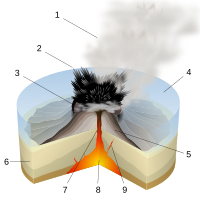
How an island is formed is depicted by the following figure
Surtseyan Eruption-numbers.svg

1: Water vapour cloud     2: Cupressoid ash
3: Crater        4: Water       5: Layers of lava and ash
6: Stratum     7: Magma conduit    
8: Magma chamber      9: Dike

Regular volcanic activity can create permanent islands - Hawaiian islands are the best example of a series of islands created by underwater volcanic eruption. 

The wow factor comes from the uniqueness of an observation when such an island is being formed in real time.  
This is exactly what had happened in 2006 in the South Pacific near the Vava'u Islands in Tonga.  I describe the amazing experience of the crew of the yacht Maiken in their own words:


The crew of the Yacht Maiken were sailing through the South Pacific near the Vava'u Islands in Tonga when they noticed that the water in the distance has gone a strange colour.  
The crew documented the phenomenon in a series of remarkable pictures as they sailed into the formation to investigate, not realizing that a volcano was erupting just a few miles away
As the crew approached, the sea mysteriously turned to stone as the volcano pushed up new land


A beach in the middle of the sea: Before long, the land mass had bubbled up out of the ocean.  One of the crew, Fredrik Fransson told Discover magazine'We looked out and, in front of us, it was as if there was no more sea. It was 'like the Sahara with rolling hills of sand as far as the eye could see'.
They hadn't run ashore, but had instead found themselves surrounded by a huge raft of floating pumice stone


'Then we saw a black pillar (of smoke) shooting up into the air, and we understood that it had to be a volcano,' said Mr Fransson, adding that they navigated cautiously towards the plume.

'It was kind of a smouldering, smokey stuff. It looked like coal, and when there was an eruption, we could see the new material piling up on it.'
They then watched as an island grew before their eyes with each explosion in an area where there should be an underwater seamount called Home Reef.


Underwater eruptions are thought to occur dozens of times a year, but normally in remote areas or at depths inaccessible to humans. 
Eight months after the island's birth, some of it had washed up in Queensland, Australia, some 2,000 miles away.

A more recent island formation happened in December 2014.

In late December, an undersea volcano in the Polynesian island kingdom of Tonga began erupting. About 60 kilometers (40 miles) north of Tongatapu, the two small islands of Hunga Tonga and Hunga Ha'apai sit atop a large seamount. These volcanic islands stand just 128 and 149 meters (420 and 490 feet) above sea level. The new eruption occurred just offshore of Hunga Ha'apai. 
According to news reports, fishermen spotted signs of an eruption on December 19, and a photographer on the island of Tongatapu observed steam plumes on the horizon on December 24. Dense cloud cover prevented other remote observations for several days.
The following natural-color images from December 29 and 31, 2014, show the waters around Tonga, Hunga Tonga, and Hunga Ha'apai, as observed on by the Moderate Resolution Imaging Spectroradiometer (MODIS) on NASA’s Terra satellite. A white plume rises into the sky on both days.  The plume extended 3 kilometers (2 miles) into the sky. The discolored water nearby suggested an underwater release of gases and rock or the disturbance of sediment by the eruption.
Hunga Ha'apai is part of the Tonga-Kermadec volcanic arc and is part of the very active Pacific Ring of Fire. The last reported eruption occurred in 2009.

island1.jpg

December 29, 2014 Photograph of the two Islands


island2-rex.jpg
December 31, 2014 Photograph of the two Islands with a new island formation

I hope this blog has provided a glimpse of an exciting natural phenomenon. 
I am grateful to Dr Prabhakara Bhatt for bringing this matter to my attention.
Post-script:  As one would expect, formation of an island by underwater volcanic eruption is not a unique event and has been happening throughout Earth's history.  It is the observation of such an event in detail that I felt was worth writing about.  Professor Gerry Peterson (of UMASS) has pointed out to me that the island of Surtsey off the southwest coast of Iceland formed in a series of more or less continuous underwater volcanic eruptions during 1963 to 1967.  Surtsy (meaning Surtur's Island  - Surtr being a fire giant of Norse mythology), at the end of 1967 was 174 metres tall and 2.8 square kilometers in area. Here is a picture of Surtsey as it looks now. 
Modern Surtsey

The island has a protective cover of solidified magma and is expected to survive for a few centuries.  Its current area is 1.4 km^2 and has a height of 155m.